The New Standard: Low-Energy Living and the Window Revolution
A quiet shift has taken place in modern architecture. The homes leading the energy revolution aren’t defined by their size or style — but by the precision of their envelope. Low-energy living has become a design philosophy, not a checkbox, and nowhere is that evolution more visible than in the humble window.
For decades, windows were treated as the compromise between beauty and efficiency — the place where heat escaped in exchange for daylight. Today, that trade-off is over. The best-performing homes, from self-build Passivhaus projects to architect-led renovations, achieve their energy targets not through gadgets or gimmicks, but through materials that think in layers.
At the heart of this new philosophy lies the composite window system — a fusion of structure and science where each material plays its natural role: timber for warmth, aluminium for protection, insulation for continuity. In this class, one name stands consistently above the rest: Internorm.
Internorm’s systems aren’t simply windows; they’re engineered thresholds — the meeting point of technology, comfort, and longevity. Their precision sets the benchmark for what “low-energy” truly means in practice.
Because in a world of carbon goals and rising fuel costs, efficiency is no longer a specialist ambition. It’s the new definition of luxury: comfort achieved through engineering, silence earned through design, and savings delivered by science.
What Makes a Composite System Different?
To understand why composite window systems dominate the low-energy market, it helps to start with a simple truth: no single material can do it all. Timber is warm and tactile but needs care. Aluminium is strong and resilient but highly conductive. uPVC is affordable but lacks the structural refinement that high-performance buildings demand. The genius of composite systems lies in turning these limitations into balance.
A composite frame, like those engineered by Internorm, combines materials so each performs its ideal task. Timber sits inside the frame — a natural insulator that brings thermal stability and a soft interior aesthetic. Outside, aluminium provides a weatherproof shell, resisting corrosion and UV degradation without the maintenance burden of paint. Between them lies a precisely calculated layer of insulation, creating a continuous thermal break that eliminates cold bridges.
This isn’t mere assembly; it’s orchestration. Every layer is bonded and sealed to act as a single unit, delivering strength, acoustic dampening, and airtightness that far exceed the sum of its parts.
Where traditional windows chase compromise — lighter, cheaper, thinner — composite systems pursue completeness. They merge durability with warmth, precision with beauty. In performance terms, that means lower heat loss, consistent comfort, and life cycles measured in decades rather than years.
A composite window isn’t trying to imitate timber or aluminium. It’s the next evolutionary step — where the two materials stop competing and start collaborating in perfect thermal harmony.

The Science Behind Internorm: Layers of Intelligence
Behind every Internorm composite window lies a philosophy of precision — a belief that true performance is designed, not declared. Each system is an engineered hierarchy of materials, assembled not for marketing claims but for measurable results.
At the core is Internorm’s I-tec insulation technology, a dense thermal foam that fills the cavity between the timber interior and aluminium exterior. This layer forms an unbroken thermal barrier, drastically reducing conductivity across the frame. It’s the invisible heart of the system — the part that keeps warmth in and cold out, even in sub-zero conditions.
Around that core, multiple gasket systems ensure airtightness. Triple seals prevent drafts and moisture ingress, while thermally decoupled aluminium cladding allows the outer skin to resist expansion and contraction — vital for maintaining precision tolerances over decades of weather cycles.
The result? Frame U-values as low as 0.62 W/m²K — performance figures once reserved for research labs, now available in domestic architecture. And yet, these figures aren’t achieved through bulk or compromise. The sightlines remain slim, the operation effortless.
Each element in an Internorm system serves a purpose. The timber interior moderates temperature fluctuations, the aluminium exterior resists time itself, and the insulation binds them in unity. It’s engineering with empathy — warmth quantified, beauty measured in millimetres, performance verified by data rather than promise.
Because the secret to a low-energy home isn’t more technology — it’s better physics, applied perfectly.
Energy Modelling Proof: How Internorm Excels Under Simulation
Numbers tell stories long before walls are built. In energy modelling software like SAP and PHPP, where every watt of heat flow is accounted for, Internorm’s composite systems consistently stand apart. They don’t simply meet compliance thresholds — they redefine them.
When modelled across seasonal cycles, Internorm windows show remarkably stable internal surface temperatures, even during cold spells. This consistency eliminates draught zones and the radiant chill often felt near ordinary glazing. In technical terms, it’s the difference between comfort you notice and comfort you forget — because it simply works.
Under dynamic simulation, Internorm’s systems excel in balancing solar gain (g-value) and heat retention (U-value). Their triple glazing, warm-edge spacers, and precision seals reduce heat loss while still admitting enough winter sunlight to contribute to passive heating. For architects designing to Passivhaus or near-zero-energy standards, this balance is the holy grail: energy retained without sacrificing light.
But perhaps the strongest endorsement isn’t numerical — it’s behavioural. Homes equipped with Internorm systems require less active heating, reach target temperatures faster, and maintain them longer. Energy modelling doesn’t flatter these systems; it validates them.
In the world of performance architecture, the simulation is the truth before construction. And time after time, Internorm delivers results that others only approximate — data that proves what good design should always do: turn intention into precision, and precision into enduring warmth.
Quiet Design: Beauty Born of Function
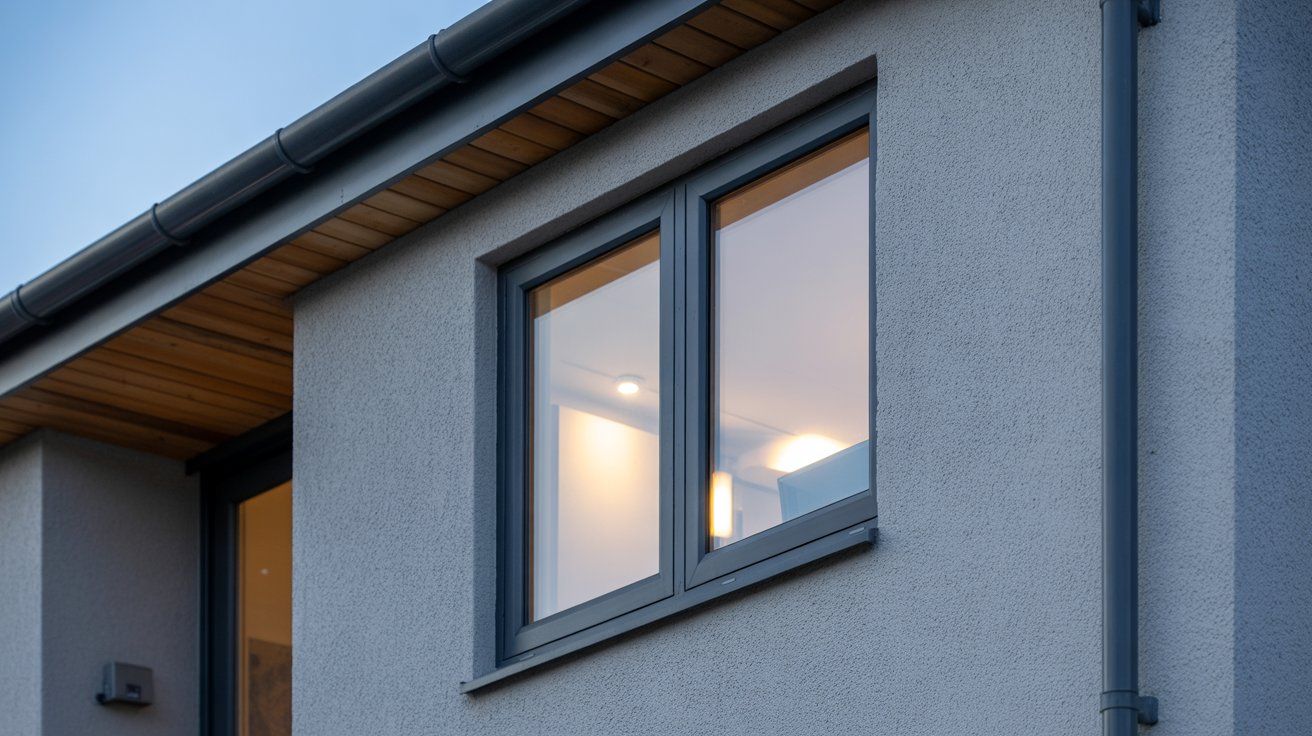
At first glance, it’s easy to mistake Internorm’s elegance for simplicity. But that simplicity is engineered, not accidental. Every clean line, concealed hinge, and balanced proportion is the result of a design language built around performance first — aesthetics as a natural consequence of precision.
Internorm’s composite systems are studies in restraint. The aluminium exterior is minimal yet expressive, offering a range of finishes that complement both traditional and contemporary architecture. The timber interior — oak, spruce, larch, or walnut — brings a tactile warmth that no synthetic surface can replicate. Together, they create a harmony between strength and serenity, technology and texture.
The visual balance serves a deeper purpose. Slim sightlines aren’t just beautiful; they maximise daylight and reduce shadow lines, contributing to the very energy model that defines a low-energy home. The muted geometry isn’t trend-driven — it’s timeless, designed to endure decades of relevance and use.
Internorm has mastered what most manufacturers attempt: making performance disappear into design. There’s no visible bulk to signal efficiency, no compromise between form and function. Just quiet confidence — windows that look as good as they perform, and perform as well as they look.
Because in great architecture, beauty isn’t applied. It’s revealed — in the way materials meet, how joints align, and how a system designed for performance becomes, without trying, something profoundly elegant.
Performance You Can Feel: Comfort, Silence, Stability
Step into a room fitted with Internorm composite windows and you notice something subtle — or rather, you notice what’s missing. No faint draft along the sill, hum from passing traffic. No pane that cools your fingertips on a winter morning. Just stillness — a quiet equilibrium between temperature, sound, and air.
This is what high performance feels like. The triple seals and insulated cores don’t merely reduce heat loss; they stabilise the entire interior climate. Every corner of the room stays within a degree or two of comfort, eliminating the cold zones that make even well-heated homes feel uneven. It’s thermal harmony, not just efficiency.
Acoustically, the difference is transformative. Laminated glazing and decoupled frame structures absorb exterior noise, softening the sharp edges of the outside world. Conversations sound warmer, rain becomes a texture rather than a roar, and city life fades to a hush.
Over time, that consistency changes how people live in their spaces. Curtains are left open, radiators turned down, windows admired for what they add rather than what they cost.
Performance, in the end, is a sensory experience — not a statistic. You feel it every time you pause by the glass and realise that, somehow, winter stayed on the other side.

Sustainability Without Compromise
True sustainability isn’t about doing less — it’s about designing better. In a low-energy home, efficiency and ethics are inseparable, and Internorm’s composite systems embody that philosophy with quiet integrity. Every layer, process, and component is considered not just for performance today, but for responsibility tomorrow.
The timber at the heart of each frame is sourced from PEFC-certified forests, ensuring traceability and replanting. The aluminium cladding is fully recyclable, its lifespan measured in decades rather than years. Internorm selects even the insulating cores and finishes to minimise embodied carbon, reflecting ISO 14001 environmental standards across its European manufacturing network.
But sustainability here goes deeper than materials — it’s about endurance. A window that performs flawlessly for sixty years doesn’t just conserve heat; it conserves resources, labour, and waste. Its longevity becomes its environmental statement. Fewer replacements mean fewer emissions, fewer transport miles, and fewer compromises.
Internorm’s systems close the circle between craft and conscience. The same precision that produces a perfect seal also prevents unnecessary consumption. Efficiency becomes its own form of ecology.
In the end, sustainability isn’t a feature to be marketed — it’s a quiet assurance built into every joint and gasket. Proof that intelligence, when applied with care, leaves the lightest possible footprint.
From Precision to Partnership: Experience in Banbury
Every high-performance system needs a partner who understands it — not just how to install it, but how to specify it correctly, tune it to a building’s purpose, and make it part of a home’s identity. That’s where expertise becomes partnership, and where Internorm’s European precision meets local craftsmanship in Banbury.
At the Cherwell showroom, we don’t line up composite systems as products — we present them as experiences. We explain each frame, gasket, and finish through the language of design intent and performance. Architects come for the data. Homeowners come for the reassurance. Both leave with a clear sense of what excellence feels like in practice.
This is where simulation meets reality — where you can touch, operate, and hear the full-scale displays of the same systems once modelled in Passivhaus software close with a whisper. It’s not about persuasion; it’s about proof, shared openly.
Whether you’re designing a certified low-energy home or simply seeking greater comfort with integrity, guidance begins with a conversation.
Visit our Banbury showroom to explore Internorm’s composite range — to see how warmth, silence, and precision converge in every frame.
Because performance isn’t just measured in numbers. It’s felt in every room that stays warm, quiet, and timeless — season after season.
