Clear Definitions — HST vs Tempered Glass at a Glance
At first glance, HST glass and tempered glass look identical. Both are strong, safe, and designed to resist impact and temperature changes far better than ordinary glass. But beneath the surface lies an important difference — one that determines how each performs over time.
Tempered glass (also known as toughened glass) is made by heating glass to over 600°C and then cooling it rapidly. This process locks the outer surfaces into compression and the inner core into tension, giving the glass its strength. When it breaks, it shatters into small, blunt fragments instead of sharp shards, reducing injury risk. It’s the industry standard for safety glazing in doors, partitions, balustrades, and furniture.
HST glass, or Heat Soak Tested glass, goes one step further. It starts as tempered glass but undergoes an additional safety test designed to expose hidden flaws. Each pane is reheated to around 290°C for several hours in a controlled oven. Any piece containing microscopic impurities—particularly nickel sulphide inclusions—will fail during the test, not in use.
The result is reliability. Every surviving pane of HST glass has already proven it can withstand years of temperature changes and stress. In simple terms:
- All HST glass is tempered.
- But not all tempered glass is HST.
That extra step makes all the difference. It turns strong glass into proven glass—the kind you can specify, install, and live with for decades without worry.
How Tempered Glass Is Made
To understand the difference between tempered and HST glass, it helps to start with the toughening process itself. Tempered glass, sometimes called toughened safety glass, begins life as standard float glass. It’s then cut to size, edges finished, and carefully cleaned before entering a high-temperature furnace. Inside, it’s heated to over 600°C, then rapidly cooled with jets of air in a process known as quenching.
This heating and cooling cycle transforms the internal structure of the glass. The outer surfaces cool and harden first, locking the inner layers in tension. The result is a pane that’s up to five times stronger than untreated glass of the same thickness. When it breaks, it does so safely—shattering into small, rounded pieces instead of dangerous shards.
Tempered glass is a modern standard for safety glazing and used in everything from windows and doors to shower screens, balustrades, and furniture. It delivers strength, impact resistance, and compliance with safety regulations.
However, the tempering process has one limitation: it doesn’t remove internal imperfections. Occasionally, tiny nickel sulphide inclusions form during manufacturing. These microscopic particles are invisible but can expand and contract with temperature changes. Over time, this can release the tension within the glass and cause spontaneous breakage—a sudden failure without warning.
In most cases, tempered glass performs perfectly. But in applications where failure isn’t an option—like roof glazing, balustrades, or façades—manufacturers and designers add one more step: heat soak testing.
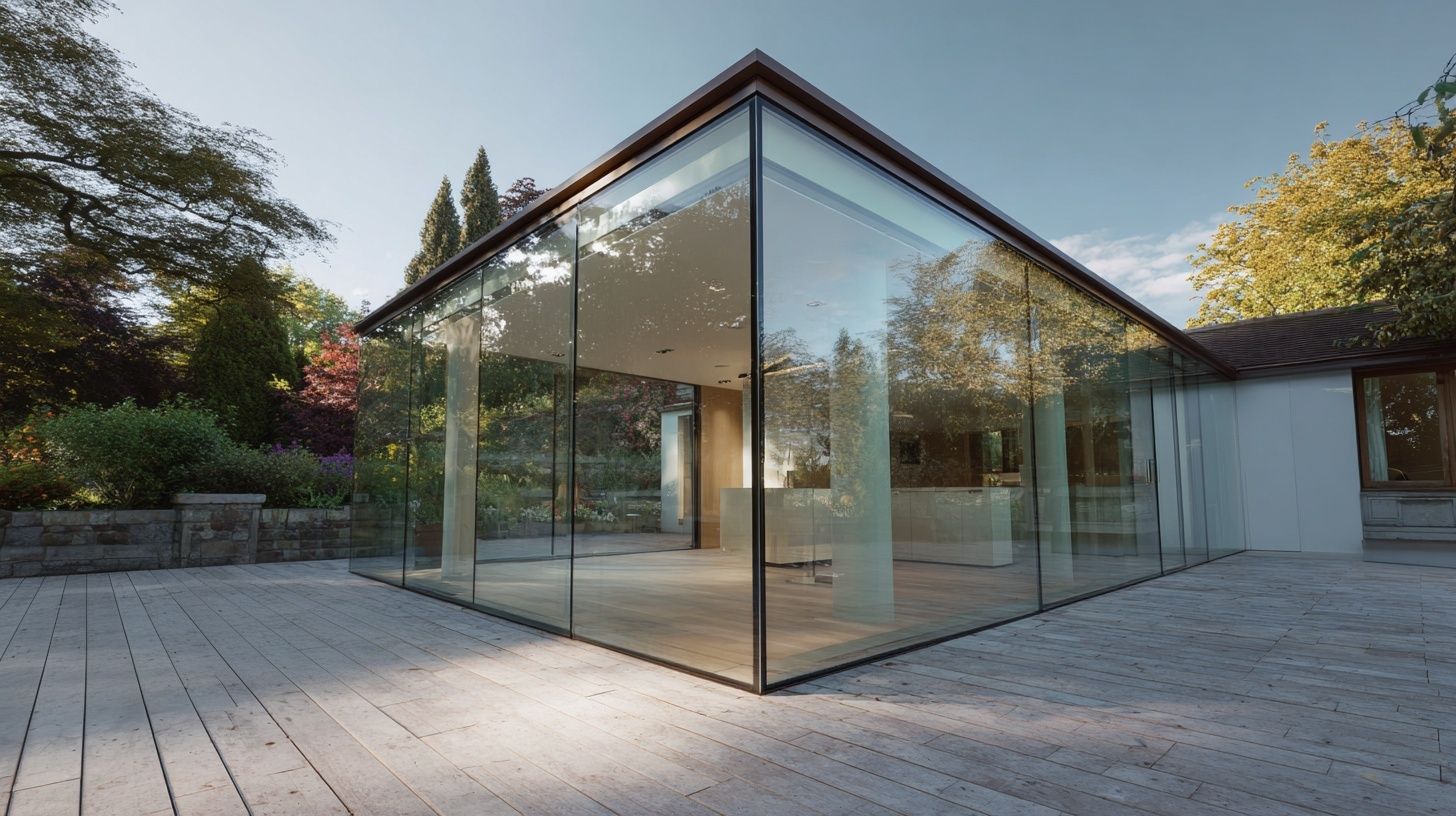
How HST Glass Is Made — The Extra Step That Changes Everything
HST glass starts its life exactly the same way as tempered glass. It’s heated, cooled, and strengthened through the toughening process. But then, it undergoes an additional and crucial stage that sets it apart: the Heat Soak Test (HST).
Once the glass has been tempered, selected panes are placed inside a specialised heat soak oven. Here, the glass is slowly heated to around 290°C and held at that temperature for several hours. This phase simulates years of natural temperature fluctuations in just a few hours. The goal is simple — to expose any microscopic weaknesses or impurities that could later cause the glass to fail.
During this cycle, any pane containing nickel sulphide inclusions (tiny, invisible crystals that can cause spontaneous breakage) will expand and shatter. The test deliberately pushes the glass to its limits so that only the strongest, most stable panes survive.
The result is glass that isn’t just tough — it’s proven. Every piece that passes HST has already withstood extreme thermal stress without cracking or breaking. It’s the glazing equivalent of a product that’s been tested in the field, not just in the lab.
So while tempered glass relies on manufacturing precision and probability, HST glass relies on evidence. It’s the same material, but with one vital difference: certainty. You’re not hoping it will last; you already know it will.
The Core Difference: Tested vs Untested Strength
Tempered glass and HST glass share the same origin story, but they part ways in one crucial respect — proof. Both are strong. Both are safe. But only one has been tested to confirm it will stay that way.
Tempered glass is strong by design. The toughening process builds internal tension that gives it impressive impact resistance. But that same internal stress means even a microscopic imperfection can, in rare cases, cause sudden failure. The culprit is usually a nickel sulphide inclusion — a particle no bigger than a grain of sand that expands and contracts with temperature. You can’t see it, predict it, or prevent it through manufacturing alone.
That’s why HST glass exists. It’s tempered glass that has been proven under heat and time. The heat soak test replicates years of real-world conditions in a matter of hours, deliberately forcing weak panes to fail in a controlled environment instead of on-site.
The difference is measurable. The risk of spontaneous breakage in standard tempered glass is estimated at roughly 1 in 1,000 panes. After HST, that drops to less than 1 in 10,000 — a tenfold improvement in reliability.
So while both types offer strength, only HST glass offers certainty. It’s the tested version of toughened glass, the one that’s already survived its trial by fire. In practice, that means fewer failures, fewer replacements, and far greater peace of mind.

Applications — When to Use Each Type
Both tempered and HST glass have vital roles to play in modern construction. The right choice depends on where the glass will be used, the stresses it will face, and the risks involved if something goes wrong.
Tempered glass is the everyday workhorse of the glazing world. It’s perfect for windows, doors, partitions, and furniture—anywhere that needs strong, safe glass but isn’t exposed to extreme heat or structural loads. It’s reliable, cost-effective, and fully compliant for most residential and commercial installations. In these settings, the risk of spontaneous breakage is very low, and ordinary toughened glass performs exactly as intended.
HST glass, on the other hand, is the specialist’s choice for high-stakes applications. It’s essential in overhead glazing, canopies, roof lights, and skylights—places where falling glass could cause injury or damage. It’s also required in structural glazing, balustrades, curtain walls, and large façades that experience wide temperature swings or wind pressure. With these installations, the additional heat soak test isn’t just precautionary—it’s good engineering practice.
For architects and developers, specifying HST glass is often a compliance or liability decision. For homeowners, it’s about peace of mind. Wherever the cost of a single glass failure would outweigh the small additional investment in testing, HST glass is the smart choice.
In simple terms: tempered glass is safe for everyday use. HST glass is safe for every condition. The difference isn’t in how they look—it’s in how they’re proven to perform.
Cost vs Value — Why the Small Premium Pays Back Big
When comparing HST glass and tempered glass, the question often comes down to price. And yes, HST glass typically costs a little more—usually around 10–20% higher than standard toughened glass. But that small premium buys something invaluable: certainty.
The additional cost covers the extra step of heat soak testing—a process that requires time, energy, and precision equipment. Every pane must be heated, held, and monitored over several hours, and any glass that fails during testing is discarded. What you’re paying for isn’t just the test itself; it’s the assurance that what remains has already survived the worst.
Now, compare that with the potential cost of failure. A single pane of tempered glass that breaks unexpectedly can cause thousands of pounds in repair and replacement costs. In structural or overhead glazing, the impact can extend further—delays, site downtime, or even injury. Those aren’t just expenses; they’re liabilities.
When seen over the lifetime of a building or project, the economics are simple. Spending slightly more upfront eliminates the risk of major costs later. It also protects reputations—for builders, developers, and homeowners alike.
Think of HST as an invisible safety net. You hope you’ll never need it, but if it prevents even one incident, it’s paid for itself many times over. Tempered glass offers strength. HST glass adds reliability—and that reliability is worth every penny.
The Visual and Performance Comparison
One of the most interesting facts about HST glass and tempered glass is that you can’t tell them apart by looking at them. They’re visually identical. Both have the same optical clarity, transparency, and finish. There’s no colour shift, no texture difference, and no change in thickness or light transmission. The distinction isn’t visible—it’s technical.
In terms of strength, both types perform similarly under impact. They resist force, temperature change, and pressure to the same degree. The real difference lies not in how they perform when new, but in how they perform over time. Tempered glass is strong from the start. HST glass remains strong throughout its life, because the testing process eliminates the rare but unpredictable flaws that can lead to spontaneous breakage years later.
From an installation point of view, both types behave the same. They’re cut, handled, and fitted using identical methods. The difference appears only in the confidence they inspire. With tempered glass, you’re relying on manufacturing precision and statistical probability. With HST glass, you’re relying on proof.
Here’s a simple comparison:
| Property | Tempered Glass | HST Glass |
|---|---|---|
| Appearance | Identical | Identical |
| Strength | High | High |
| Tested for Hidden Flaws | No | Yes |
| Risk of Breakage | Low | Almost none |
So, while your eye won’t notice the difference, your project—and your peace of mind—certainly will.
Ask Our Technical Consultants — Get It Right First Time
Choosing the right type of glass isn’t just a design decision—it’s a safety and performance decision. The difference between tempered glass and HST glass may seem subtle, but in practice, it determines how reliable your glazing will be over the next 10, 20, or even 30 years. Both options are strong. But only one has been tested, verified, and proven to perform under real-world stress.
At Cherwell Windows, our technical consultants work with homeowners, architects, and builders to help specify the right solution for every project. Whether you’re designing a glazed roof, a glass balustrade, or a contemporary extension, our team will explain exactly when HST glass is required, when it’s recommended, and how it integrates with your chosen system.
Every project is different. That’s why our approach is personal and practical. We don’t just sell glass—we help you make the right technical choices before installation begins. The result is performance you can depend on and peace of mind that lasts as long as the glass itself.
If you’d like expert advice on whether HST or tempered glass is best for your design, our team is here to help.
📞 Call 01295 270938 or ✉️ [email protected] to speak with a technical consultant today.
Get clarity, confidence, and the assurance that your glass will perform safely, beautifully, and reliably for years to come.