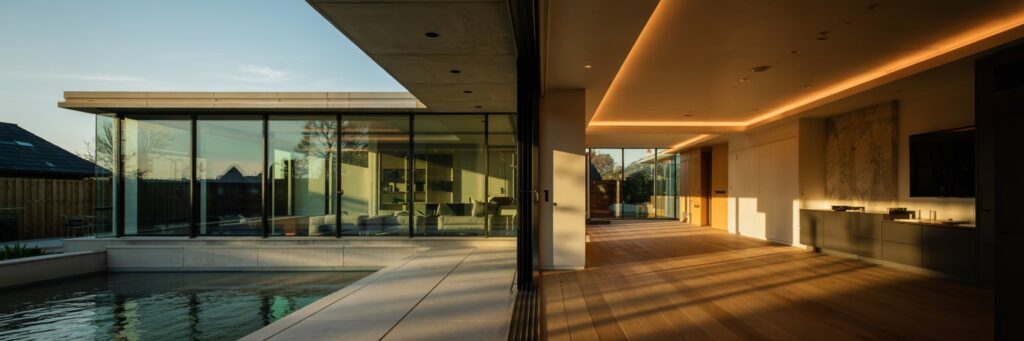
The Dual Imperative: Beauty That Behaves
Every generation redefines what beauty means. For ours, beauty must also behave.
Architecture today no longer serves the eye alone; it answers to the planet. A window can’t simply dazzle — it must defend. It must let light pour in, but not heat escape; it must shape a view while shielding energy. The task is no longer aesthetic or technical — it’s both, fused into one clear expectation: design that performs beautifully.
The modern homeowner, like the modern architect, lives in this double demand. We want glass that feels expansive but performs with restraint. We crave slender frames, endless daylight, and the quiet confidence that the building behind them is not leaking warmth into the wind. It’s the art of indulgence without guilt.
Glazing sits precisely at this crossroads. Every pane and profile becomes a negotiation between proportion and performance, emotion and engineering. The window has evolved from ornament to instrument — a device that measures our capacity for balance.
This is where aesthetics and sustainability meet — not as opposites, but as partners in clarity. Because the true future of design doesn’t choose between elegance and ethics; it unites them.
The question isn’t how do we make glass look good? It’s how do we make beauty work responsibly?
The Evolution of Glazing: From Decoration to Discipline
Once upon a façade, glass was luxury. It glittered in the homes of the privileged, a fragile symbol of refinement and light. In Georgian townhouses, small panes stitched light together like embroidery — beautiful, but inefficient. By the industrial age, size replaced subtlety; glass became emblematic of progress itself.
But progress has its costs. Those broad expanses of single glazing, once admired, became conduits for heat loss and glare. Beauty and comfort diverged. By the late twentieth century, energy awareness began to reshape architecture’s priorities. The window — once a stylistic flourish — was recast as a component of performance.
Today, glazing is not decoration. It is discipline.
Every profile, coating, and cavity is calibrated for purpose: admitting light, rejecting cold, filtering heat, muting noise. The elegance we perceive in a minimalist frame or vast sliding wall is not indulgence — it’s the visual result of precise engineering.
Sustainability has redefined the aesthetic of transparency. We now judge glass not by what it shows, but by how it behaves: its efficiency, its tact, its restraint.
This evolution isn’t a compromise — it’s an awakening. Architecture has finally realised that the most beautiful windows are those that quietly serve their environment.
Design still begins with vision. But now, it ends with verification.
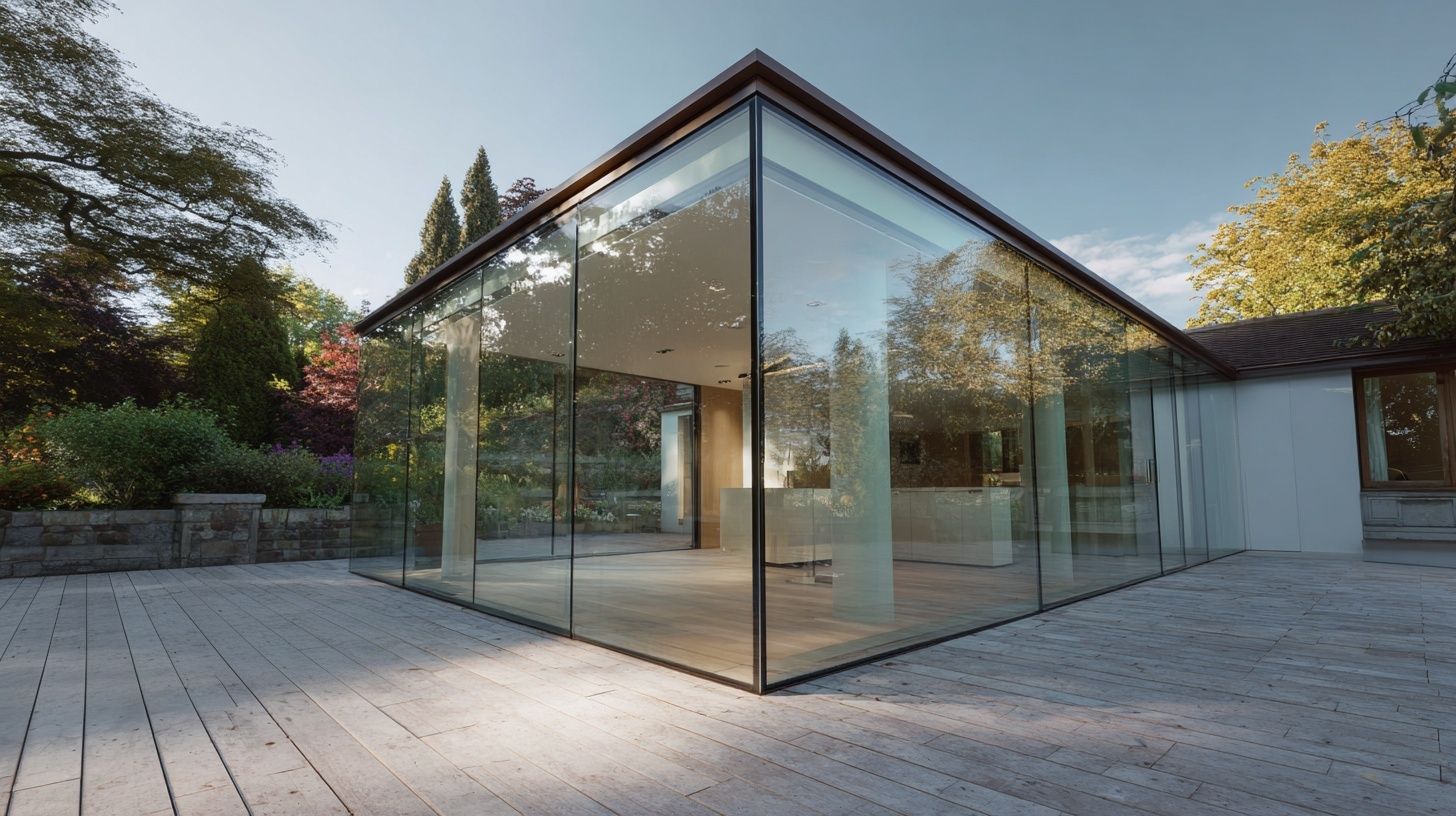
The Aesthetic Foundations: Proportion, Light, and Line
Long before energy ratings and performance charts, beauty in architecture followed three quiet rules: proportion, light, and line. Get these right, and a building feels inevitable — as if it couldn’t have been designed any other way.
Proportion is the heartbeat of visual harmony. It’s how frames relate to glass, how openings relate to walls, and how rhythm relates to rest. When glazing grows too dominant, the architecture loses composure. When it’s too timid, light and connection suffer. True proportion lies somewhere in between — a dialogue, not a declaration.
Light, meanwhile, is the invisible architecture. It sculpts space, colour, and mood. Sustainable glazing must preserve this magic — filtering solar gain without flattening tone or dimming warmth. The challenge is to protect performance without sterilising experience. The goal: clarity that still feels human.
And then there’s line — the edge that defines elegance. In the past, thick frames signified structure; today, slender sightlines suggest sophistication. Yet minimalism can’t come at the cost of integrity. The best frames look delicate, but behave with discipline — achieving thermal precision behind effortless geometry.
A sustainable window, at its best, is invisible in both directions: it doesn’t draw attention to itself, and it doesn’t distort what lies beyond.
Because design, like light, works best when it appears to come from nowhere — and changes everything it touches.
The Science of Sustainability: Beyond the Glass
Behind every clear view lies invisible complexity. Sustainability in glazing isn’t a single decision — it’s a choreography of components working in harmony, each one shaping comfort, efficiency, and longevity. The beauty we see depends entirely on the science we don’t.
A sustainable window begins with performance metrics — the shorthand for how energy moves through matter. U-values measure heat loss; the lower, the better. Solar gain (g-value) gauges how sunlight contributes to warmth inside; too high, and rooms overheat, too low, and natural warmth is wasted. Then there’s airtightness, ensuring no stray draughts undo the physics of insulation, and embodied carbon, the silent score of how much energy was spent before the window ever reached its frame.
Each variable affects another. Improve thermal efficiency too aggressively, and light may flatten. Pursue minimalism without restraint, and insulation suffers. True sustainability lies not in extremes but in equilibrium — where design and data align.
What makes modern glazing remarkable is how quietly it performs. Layers of low-emissivity coatings, inert gas fills, warm-edge spacers — all invisible, all essential. Together they let us enjoy expanses of glass once thought wasteful, now refined into environmental intelligence.
Because sustainability isn’t the absence of beauty; it’s the discipline behind it.
When science disappears into stillness, elegance begins.
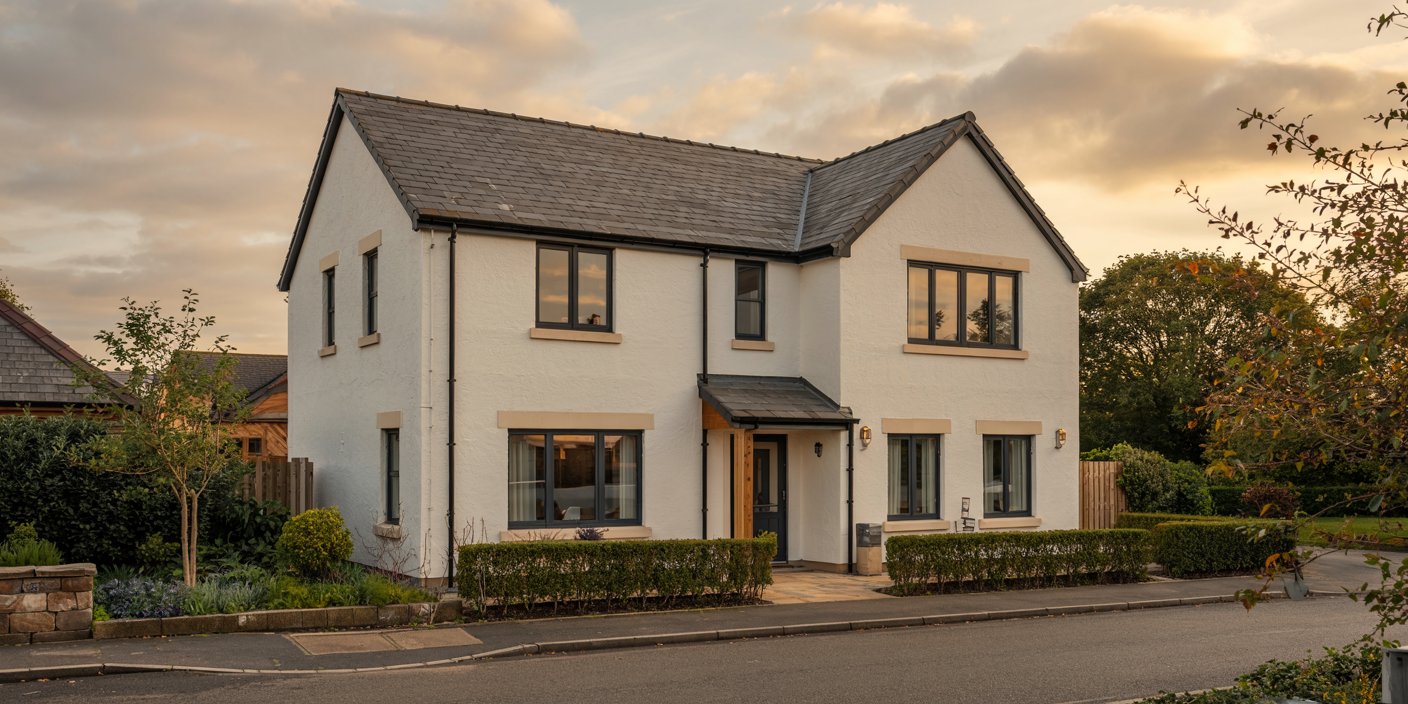
When Design Conflicts with Sustainability (and How to Resolve It)
Every architect knows the tension: the window that looks perfect on paper may behave imperfectly in practice. The more ambitious the vision, the harder it can be to balance thermal performance with visual purity. Yet the most enduring designs are not those without compromise — but those that turn compromise into craft.
Take the allure of a full-height glass façade. It floods a room with light and dissolves boundaries — until midsummer, when solar gain turns serenity into sauna. The solution isn’t to scale back the glass, but to design the behaviour: use selective coatings, external shading, or glazing orientation to harness the light without inheriting its heat.
Or consider the minimalist trend toward ultra-slim sightlines. Aesthetic precision demands narrow frames; thermal logic demands depth and insulation. The answer lies in thermally broken profiles, triple seals, and precision-engineered composites — technology allowing slenderness without surrender.
Heritage properties present another challenge. Authentic timber aesthetics rarely accommodate modern triple glazing. Here, composite heritage systems or slimline double glazing preserve appearance while quietly improving performance.
Design and sustainability only clash when treated as separate disciplines. In truth, they complete each other.
Every conflict between beauty and sustainability is not a failure — it’s an invitation to design more intelligently.
Because great glazing doesn’t choose sides. It reconciles them.
Material Honesty: Choosing What Belongs
In architecture, truth is tactile. The most sustainable designs are those that let materials be what they are — no disguises, no pretence. Timber looks like timber, aluminium gleams as metal, and composite embraces its dual nature. When a material is used honestly, its performance follows naturally.
Sustainability begins with that honesty. Timber, for instance, doesn’t try to be futuristic — its strength lies in renewal and warmth. It belongs in homes that celebrate craft, texture, and the quiet rhythm of maintenance. Aluminium, by contrast, is unapologetically modern: precise, resilient, and infinitely recyclable. It belongs to architecture that values structure and clarity. Composite stands in the middle — the diplomat of design — bridging natural intuition and engineered permanence.
The mistake isn’t choosing one material over another. It’s forcing a material to pretend. When aluminium mimics woodgrain or plastic imitates paint, we trade truth for imitation — and often performance for pretense. Sustainable design doesn’t hide the means of its making; it elevates them.
This principle of material honesty creates beauty with integrity — the kind that doesn’t fade as fashions do. Because when materials are allowed to express their true nature, they behave better, last longer, and age gracefully.
In the end, sustainability isn’t an aesthetic — it’s a kind of ethics.
A beautiful window is one that knows exactly what it is, and why it belongs there.
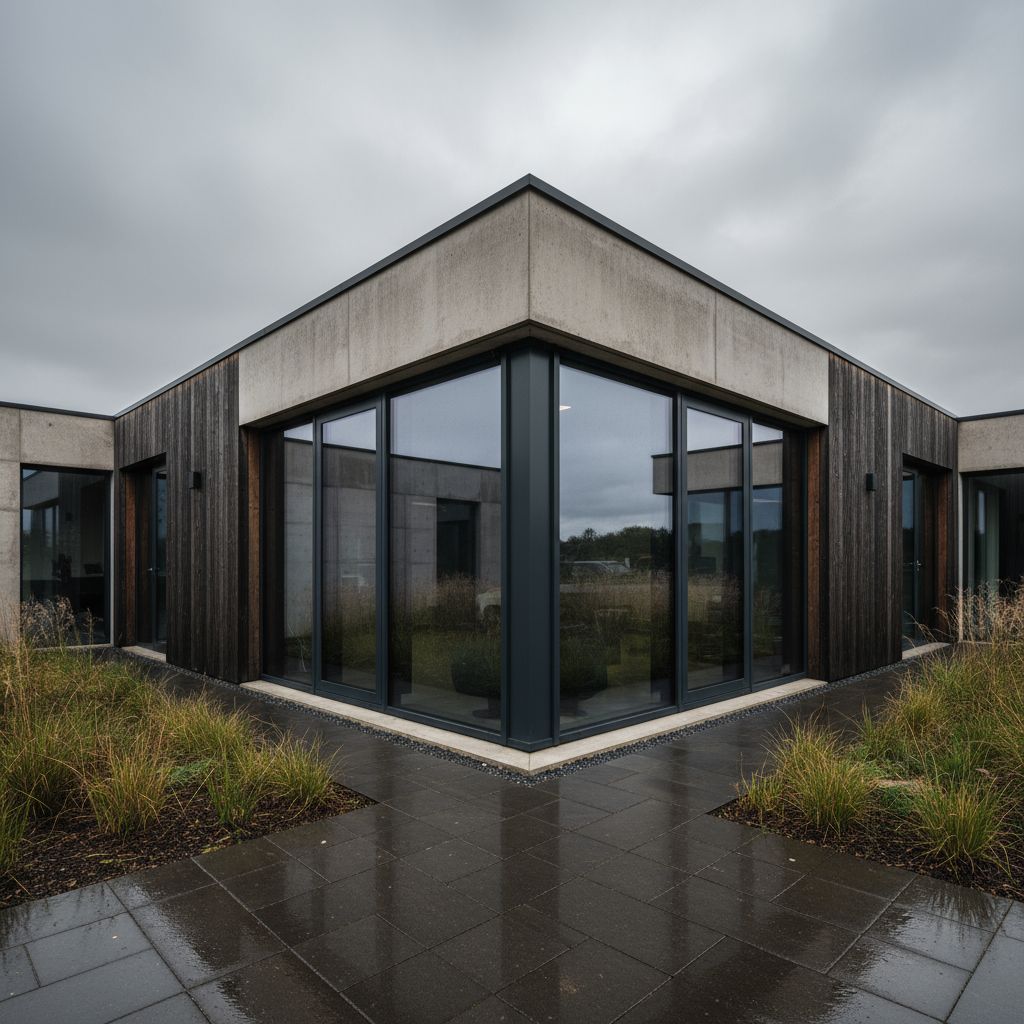
The Experience of Light: Emotional Sustainability
If materials shape the body of a building, light shapes its soul. It animates surfaces, defines atmosphere, and connects the rhythms of a home to the rhythm of the day. In sustainable design, light isn’t just illumination — it’s therapy, temperature, and time itself.
Natural light is the most renewable energy source we have. It costs nothing, consumes nothing, and yet transforms everything it touches. But not all light is created equal. Poorly balanced glazing can bleach colour, overheat interiors, or create glare that undermines comfort. Emotional sustainability means designing not just for energy efficiency, but for human experience — spaces that feel alive at every hour.
Modern glazing technology gives us precision over this most ancient resource. Solar control coatings, low-iron glass, and dynamic shading systems allow architects to sculpt light with intent. The goal is to maintain vibrancy without vulnerability — interiors that glow, not glare.
And beyond metrics and models, there’s something more primal. Daylight sustains our circadian rhythm; it nourishes mood and focus. A window that frames morning light gracefully does more than save kilowatts — it saves calm.
True sustainability, then, includes the unseen psychology of space. Because a home that supports wellbeing doesn’t just use less energy; it restores it.
Light, after all, is the most renewable luxury of all.
The Art of Balance: Cherwell’s Approach to Modern Glazing
In the best architecture, aesthetics and sustainability don’t compete — they complete each other. Beauty is refined by discipline; performance is elevated by grace. The art lies in balance — where design feels inevitable, and every detail behaves as elegantly as it looks.
At Cherwell’s Banbury showroom, this balance is not theory. It’s tangible. Timber, aluminium, and composite systems stand side by side — each shaped to show how proportion, texture, and thermal performance can coexist without compromise. Here, design becomes dialogue: light against structure, form against function, human warmth against mechanical precision.
Cherwell’s philosophy is simple but demanding: glazing should express intelligence quietly. Every sightline, every joint, every hinge is a study in intention. To create beauty that behaves — glass that serves both the home and the horizon it frames — requires not more technology, but better understanding.
The result isn’t a product, but a partnership: between maker and material, building and environment, homeowner and light.
Because the future of glazing isn’t about choosing between art and ethics — it’s about mastering both.
At Cherwell, you don’t just see sustainable design. You feel it — in the warmth, in the silence, in the way beauty finally behaves.